How we waterproof a pool
A concrete shell is strong, but concrete on its own is slightly porous. Every pool needs a waterproofing layer: a cement-based waterproof render under mosaic or porcelain, or a reinforced membrane that is itself fully watertight.
New pools
On a new gunite shell we apply a waterproof render system and seal every fitting, from skimmers to light niches, before the finish goes on. Fittings are where most leaks start, so we pay most attention there. The pool is then filled and checked before the terrace is finished around it.

Is your pool losing water? Tell us how much it drops in a day.
Ask on WhatsAppOlder pools that lose water
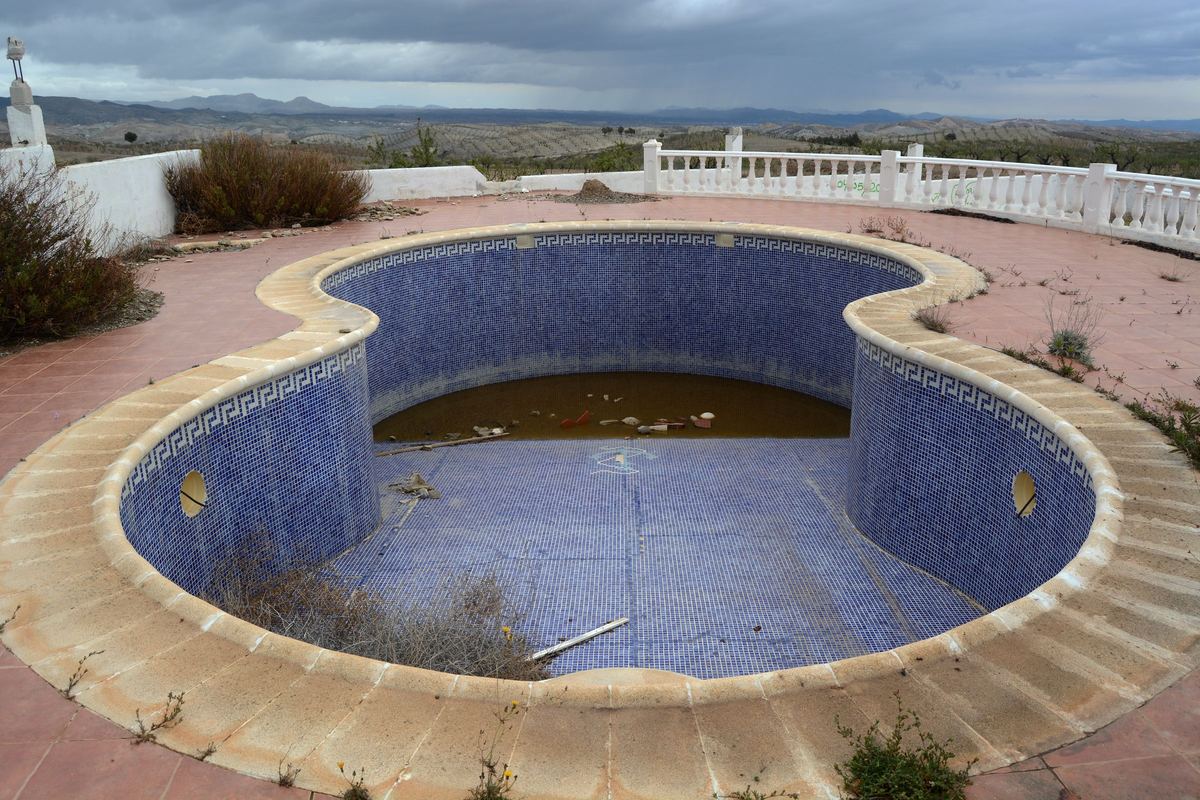
Older pools often lose water through cracked render, failed grout or fittings that have moved. If the pipework is sound, a reinforced membrane relining seals the whole shell in one layer and is the most reliable cure. Before relining, we pressure-test the pipes, because no lining fixes a leak in a buried pipe.
Membrane or render?
A reinforced membrane is the most watertight option and is quick to fit. Mosaic and porcelain on waterproof render are more traditional and can be repaired piece by piece. We compare them on mosaic, porcelain or membrane.
Where pools leak
- Fittings: skimmers, lights and return jets, where they pass through the shell.
- Pipework: joints underground, especially on older pools or after ground movement.
- Shell cracks: rarer, often from movement on a slope or an empty pool lifting.
- The finish: missing grout, loose tiles or a damaged liner.
Finding the leak first
Fixing the wrong thing is the most expensive mistake with a leaking pool. We start with simple checks: the bucket test, isolating the pump, and watching where the water level stops dropping. Pipes are pressure-tested separately. Only when we know where the water is going do we recommend a repair or a relining.
Waterproofing the plant room and terrace
Waterproofing does not stop at the pool. A plant room below ground needs drainage and a waterproof floor. Terraces built over rooms, such as a pool house or garage, need a membrane under the paving. We plan these with the pool so water ends up where it should.
After relining
Once a pool is relined, we fill it, check the fittings and monitor the level over the following days. A properly fitted membrane needs very little maintenance beyond normal cleaning and keeping the water balanced; see choosing a pool finish.
Render systems on new pools
On a new gunite shell, waterproofing starts with the concrete itself: a dense, well-compacted shell with the right concrete cover over the steel is far less porous than a poorly sprayed one. Over it we apply a cementitious waterproofing system in coats, with reinforcing mesh at corners and around fittings where movement concentrates. Each fitting is sealed with a flange or collar designed to bond to the render. The finish then goes on top, whether mosaic, porcelain or a membrane. Before any of that, the shell is filled and the level watched. That test shows the structure and fittings are sound before the money is spent on the finish.
Why old pools in this area leak
Many pools on the Costa Blanca were built in the 1970s to 1990s with thin block walls, little steel and simple render under mosaic. Decades of hard water, sun and ground movement open hairline cracks, and grout lines wash out. The pipes, often glued PVC laid straight into the ground without bedding, can crack where tree roots or settling soil pull on them. So a leaking older pool is rarely fixed by patching one tile. In most cases it needs the pipes tested, any failed joints replaced, and the shell sealed with a relining.
Waterproofing is the core of every relining we do.
Read next
Questions we are asked
How do I know if my pool is leaking?
A bucket test compares the pool's level with a bucket of water on the step. If the pool drops faster, there is a leak.
Does a membrane cover up problems in the shell?
It seals the surface, but structural cracks and pipe leaks must be dealt with first. We check both before relining.
How much water does a pool normally lose?
In summer, evaporation alone can take several millimetres a day. More than that, or losses with the pump off, suggest a leak.
Can a leak be fixed without draining the pool?
Some can. Fittings and pipes can often be repaired with the pool full; relining needs it empty.
Jávea Pools
Keep the water in
Message us with a photo of the pool and how much it loses, and we will suggest the fix.