Designing a pool with low running costs
Most of a pool's running cost comes from the pump, the heating and lost water. A variable-speed pump, a correctly sized heat pump used with a cover, and running both on solar power during the day can cut the cost dramatically compared with an older pool.
The pump
The filtration pump runs for hours every day, so it is usually the biggest electricity user. A variable-speed pump runs slower for longer, uses far less power and is much quieter. We fit one as standard on new pools and recommend it on every renovation.
Want to know what your pool would cost to run? Ask us with its size and location.
Ask on WhatsAppHeating with a cover
An uncovered pool loses most of its heat overnight. Sizing a heat pump together with a cover means a smaller, cheaper unit and much lower bills. On villas with solar panels, we set the pump and heat pump to run in the middle of the day.
Water and chemicals
Evaporation and splash-out are the main water losses. Covers, sensible edge design and an automatic top-up with a meter keep them in check. A salt system with automatic pH control keeps chemical use steady and low.
Where the running cost goes
| Item | What drives the cost | How to cut it |
|---|---|---|
| Filtration pump | Hours a day and pump speed | Variable-speed pump, sensible timers |
| Heating | Heat lost overnight and in wind | Cover, correctly sized heat pump, solar power |
| Water | Evaporation, splash-out, backwash | Cover, glass-media filter, good edge design |
| Chemicals | Sun, use and water balance | Salt system, automatic pH control |
| Repairs | Age and quality of equipment | Good equipment, dry and accessible plant room |
Pipes and pumps
A pump has to push water through the filter and the pipes, and narrow or long pipes make it work harder. On new pools we use generous pipe sizes, keep the plant room close to the pool and avoid unnecessary bends. On older pools, a rebuilt plant room closer to the pool can make a noticeable difference.
Running with roof solar panels
Many villas here now have photovoltaic panels on the roof. The pool is one of the best ways to use their output, because the pump and heat pump can run in the middle of the day when the panels produce most. We set the timers to match. Where the house has batteries, we make sure the pool does not drain them overnight.
Simple habits that save money
- Close the cover every evening, even in summer.
- Run the pump longer in summer and shorter in winter, rather than the same hours all year.
- Keep the skimmer baskets and filter clean, so the pump does not strain.
- Check for leaks if the level drops more than evaporation explains.
Edges, overflow and water loss
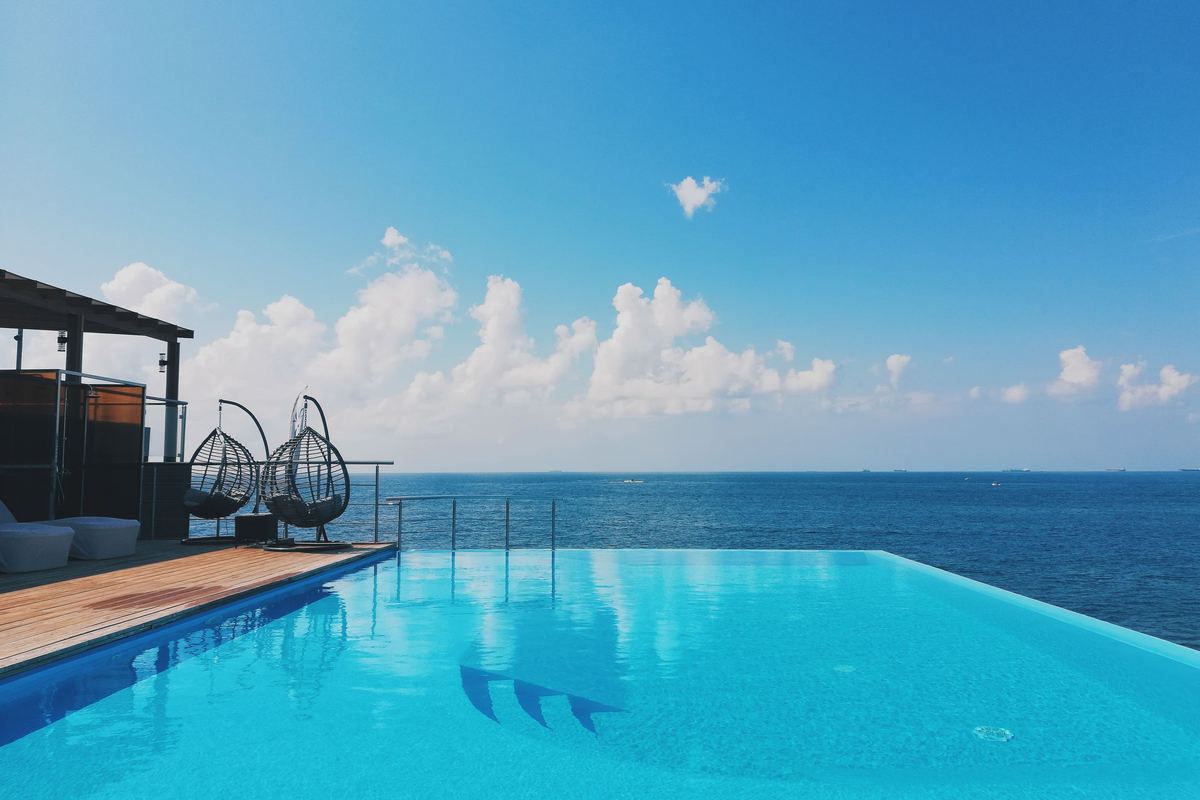
Infinity and overflow pools lose more water than skimmer pools, because water is constantly moving over an edge where it evaporates and catches the wind. They also run a second pump to keep the edge flowing. The efficiency answer is not to avoid them but to run the edge only when you are there to enjoy it, on a timer or from an app, and to keep the pool covered at night. A skimmer pool with a cover is the most frugal design of all.
Upgrading an older pool in stages
Not every saving has to happen at once. A common order on older pools is: first a variable-speed pump and a cover, which give the quickest returns; then glass-media filtration and automatic pH; then a heat pump if you want a longer season. Each step works on its own and fits with the next. We can plan the sequence so nothing you fit now has to be replaced later. See pool renovation.
Heating is where most running cost goes, so we size every heat pump with a cover in mind.
Read next
Questions we are asked
Can a pool run on solar power?
The pump and heat pump can run largely on solar during the day if the villa has enough panels and the timers are set to match.
Is a variable-speed pump worth it on an existing pool?
Usually, yes. On a pool that filters eight to twelve hours a day in summer, the saving on electricity adds up quickly.
How many hours a day should a pool pump run?
It depends on the pool size, the filter and the season. In summer many pools need eight hours or more at low speed; in winter far fewer.
Is it worth replacing a working single-speed pump?
Often, yes. The power saved by a variable-speed pump can pay back its cost over a few seasons.
Jávea Pools
Want a cheaper pool to run?
Send us your pool's size and equipment and we will suggest where to save.