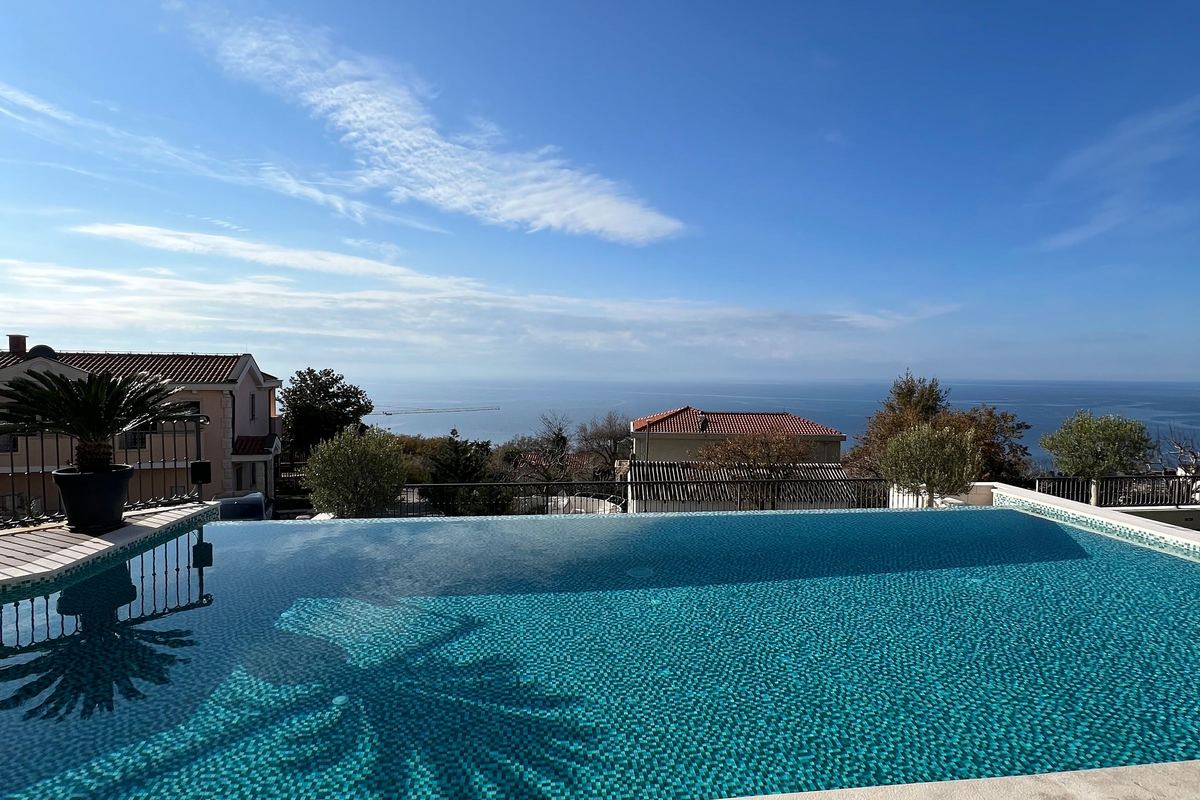
Where to put the pool plant room
The plant room houses the pump, filter, chlorinator and controls, and is often an afterthought. It should be close enough to the pool for efficient pipe runs, far enough from bedrooms to be quiet, dry, ventilated and easy to reach.
Why old plant rooms fail
On many older villas the equipment sits in a damp pit under the terrace, reached through a heavy hatch, that floods in autumn storms. Pumps and electrics fail early, and nobody wants to go down there. Much of the work in a renovation is rebuilding the plant room properly.
Is your plant room a damp hole under the terrace? Send us a photo of it.
Ask on WhatsAppWhere we put it
On sloping plots, the space under a raised pool terrace is ideal: dry, out of sight, and level with the pool. On flat plots we use a small built enclosure screened by planting, or part of a pool house. We keep it away from bedrooms and neighbours' windows, because the pump runs for hours every day in summer, often into the evening.
What goes in it
A modern plant room holds a variable-speed pump, a sand or glass filter, the salt chlorinator and pH dosing, the control panel and, often, a heat pump outside it. We leave room to work, add drainage and ventilation, and label everything for whoever looks after the pool.
Size and layout
A plant room for a typical villa pool needs space for the filter, the pump, the chlorinator, the control panel and room to stand and work, roughly 2 x 1.5 m at a minimum. Add more if there will be a larger filter, a counter-current pump or a balance tank for an infinity pool. A door wide enough to change the filter tank without taking the room apart saves trouble later.
Above or below the water level
A pump below the water level fills by gravity and starts easily, but the room can flood if a pipe fails. A pump above the water needs to be self-priming and well sealed. On sloping plots, a room under the terrace usually sits just below the pool's water level, which is ideal, with a drain to take any water away.
Noise
Even quiet pumps hum. We mount equipment on vibration pads, fit the plant room door with a seal, and keep the room away from bedrooms and neighbours. A variable-speed pump running at low speed overnight is barely audible from a few metres away. Heat pumps should sit outdoors in open air, away from windows; see pool heating.
Electrics and safety
The plant room has its own protected circuit and a panel with timers, safety switches and isolators. Chemicals for pH and chlorine are stored separately from the electrics and from each other, because some react dangerously if mixed. We label everything and leave a diagram on the wall for whoever maintains the pool.
Pipework that can be serviced
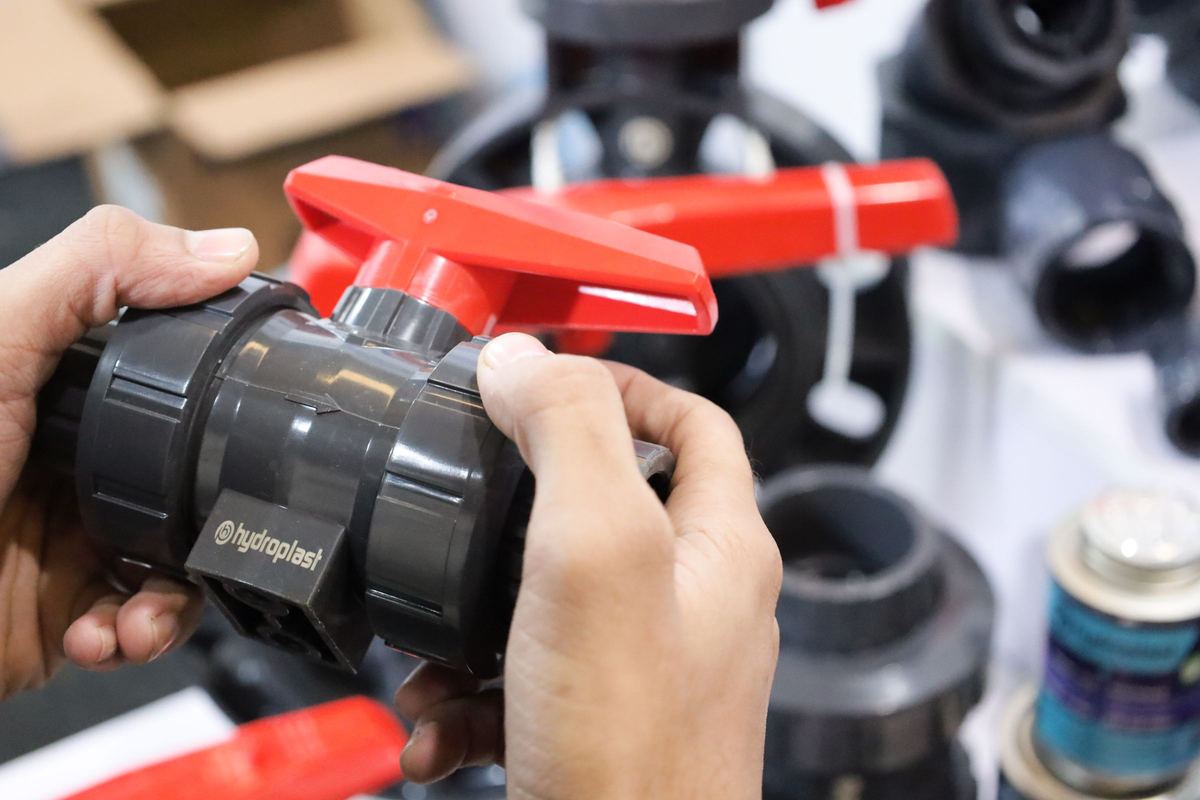
A well-built plant room has its valves within reach, labelled by what they control: skimmers, main drain, returns, heat pump, cleaner line. Unions either side of the pump and filter let them be removed without cutting pipes. A clear route to the main drain valve means the pool can be isolated quickly if something fails. On older pools, we often find valves buried in a tangle of pipes added over the years, and simply redoing the manifold makes the pool easier and cheaper to look after.
Equipment for infinity pools
An infinity pool needs more in its plant room: a balance tank to hold the water that spills over the edge, a level control to top it up, and often two pumps, one for filtration and one to keep the edge running. These take more space and need careful planning of levels, because the balance tank must sit below the catch basin. On hillside plots the room under the pool terrace is the natural home for all of it. See retaining walls.
The plant room is designed into every new pool from the start.
Read next
Questions we are asked
Can the pump be heard at night?
A modern variable-speed pump runs very quietly at low speed. Placing the plant room well matters as much as the pump.
Can a plant room flood?
Underground ones can, in heavy storms. We add drainage and, where possible, build them above ground.
Can the plant room be in the garage?
Sometimes, if it is close enough to the pool. Long pipe runs reduce efficiency, so we check the distance and levels first.
Do plant rooms need ventilation?
Yes, to keep the electrics dry and to vent any fumes from chemicals. We add vents or a small extractor.
Jávea Pools
Equipment in the right place
Send us photos of the pool and plant room and we will suggest improvements.